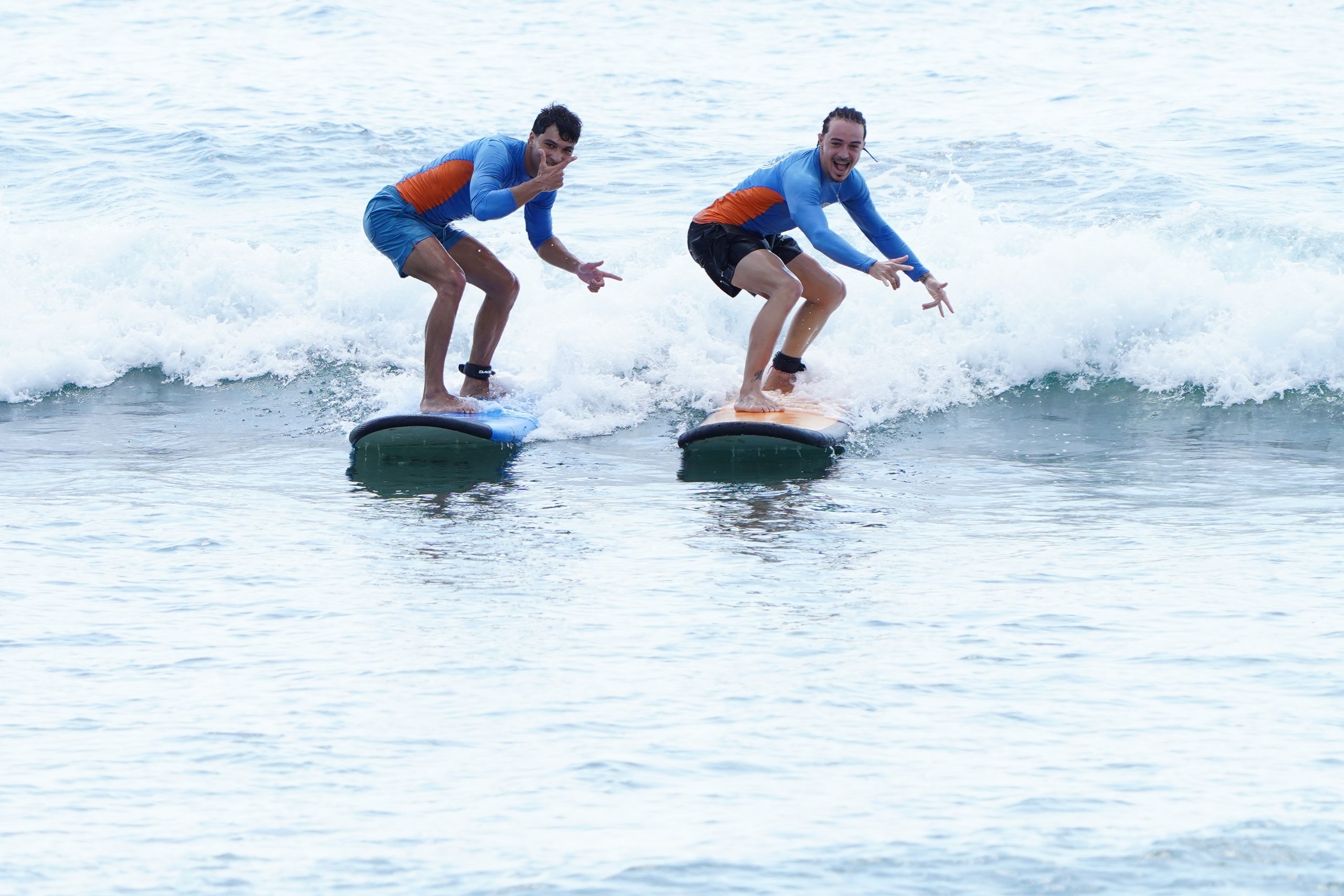
Surf together, learn together, and share the stoke. Our semi-private lessons are designed for 2–3 people — perfect for couples, friends, or small groups who want to experience the waves side by side.
- Shared Experience: Ride waves together while still receiving focused guidance from your instructor.
- Balanced Attention: Small group size ensures personalized coaching without losing the fun of learning as a team.
- Flexible Learning: Progress at your own pace while encouraging and motivating each other.
- Ideal For: Friends, couples, or families who want a mix of personal attention and group energy.
-
1-12 people
-
5,554m/18,192ft
-
Nepal
-
Moderate
-
Kathmandu, Nepal
-
Kathmandu, Nepal
-
Breakfast in Kathmandu and all meals during the trek
-
Hotel accomodation in Kathmandu and teahouses during the trek
Travel is the movement of people between relatively distant geographical locations, and can involve travel by foot, bicycle, automobile, train, boat, bus, airplane, or other means, with or without luggage, and can be one way or round trip. Travel can also include relatively short stays between successive movements.
The origin of the word "travel" is most likely lost to history. The term "travel" may originate from the Old French word travail, which means ‘work’. According to the Merriam Webster dictionary, the first known use of the word travel was in the 14th century.
It also states that the word comes from Middle English travailen, travelen (which means to torment, labor, strive, journey) and earlier from Old French travailler (which means to work strenuously, toil). In English we still occasionally use the words "travail", which means struggle. According to Simon Winchester in his book The Best Travelers’ Tales (2004), the words "travel" and "travail" both share an even more ancient root: a Roman instrument of torture called the tripalium (in Latin it means "three stakes", as in to impale).